STEPHANIE CLAIRE ART

I graduated from Leeds Arts University with a First in Visual Communication and then, as you do, joined the police.
It wasn't the obvious next step for an art graduate, but it taught me more about people than any degree could. That job shows you life at its rawest: the fear, the grief, and the strange tenderness people show each other on their worst days.
I carried a lot of it home with me.
Eventually it caught up with me, and I left after being diagnosed with PTSD. The flashbacks were relentless, and nothing seemed to touch them except painting.
When I was properly lost in it, in that flow state where time goes elastic and you forget to eat, the noise stopped. The anxiety loosened its grip, the depression lifted, and I felt connected to something much bigger than me.
I've thought about that feeling a lot since, partly because I later trained as a person-centred counsellor and now can't help analysing everything, including myself.
Psychologists would call it flow. Others might call it meditation, prayer or channelling. I'm not sure I need to pick one.
All I know is that the best pieces don't feel like mine. I show up, get out of the way, and something comes through.
The work itself is a conversation between earth and water. Alcohol ink brings the water: fluid, unpredictable and completely unwilling to do as it's told.
The earth comes from what I layer into it: walnut ink, crushed marble, rock salt, mineral pigments and occasionally coffee, which is also the material I consume in industrial quantities.
Water is about letting go, and earth is about being held. I think most of us need a bit of both.
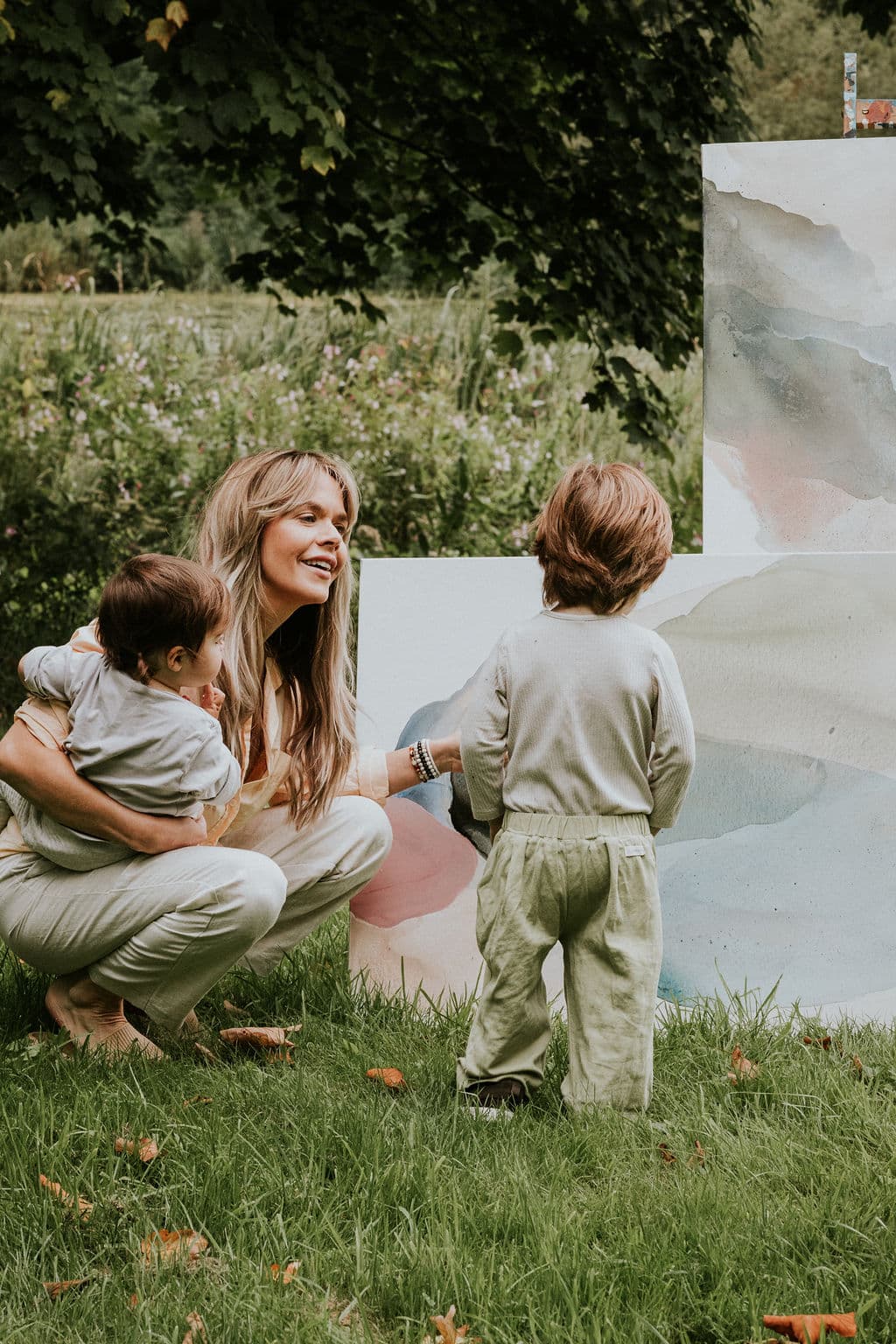
These days I paint from my studio in Northwich, Cheshire, usually in the gaps between school runs and snack negotiations with my two small children.
My paintings hang in homes around the world and have been featured in House & Garden. I also run workshops for anyone who fancies getting their hands messy and their head quiet.
More than anything, I hope my work offers you what painting offered me: a moment to pause, a place for your mind to rest, and a gentle nudge to notice the small, beautiful details we're usually too busy to see.